
Of all the characteristics birders and bird researchers rely on to identify birds, plumage is certainly one of the most critical. As banders, plumage can tell us a lot not only about the bird’s species, but also its sex, age, and even conditions it faced when those feathers were growing in.
But as with all things, sometimes individuals break the mold and exhibit atypical feather coloration.
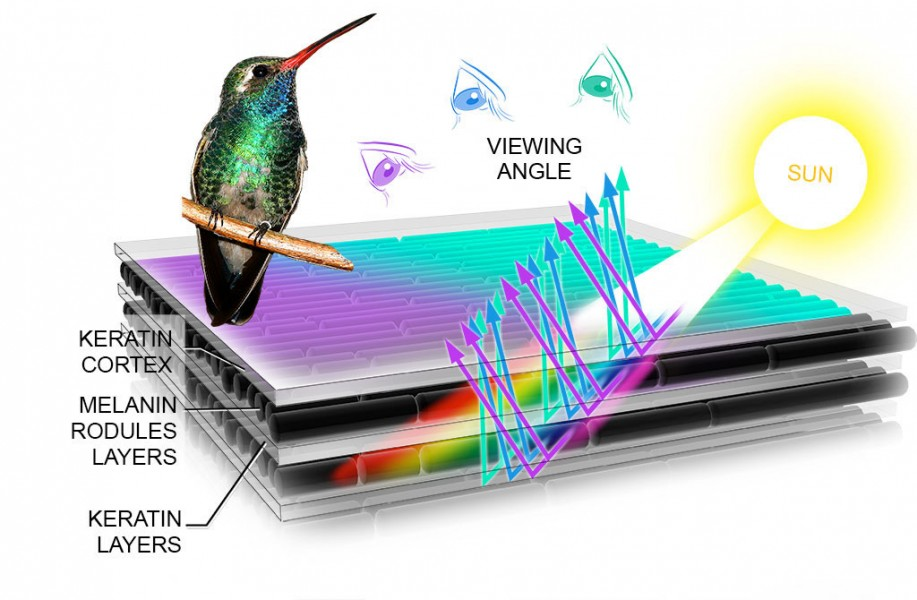
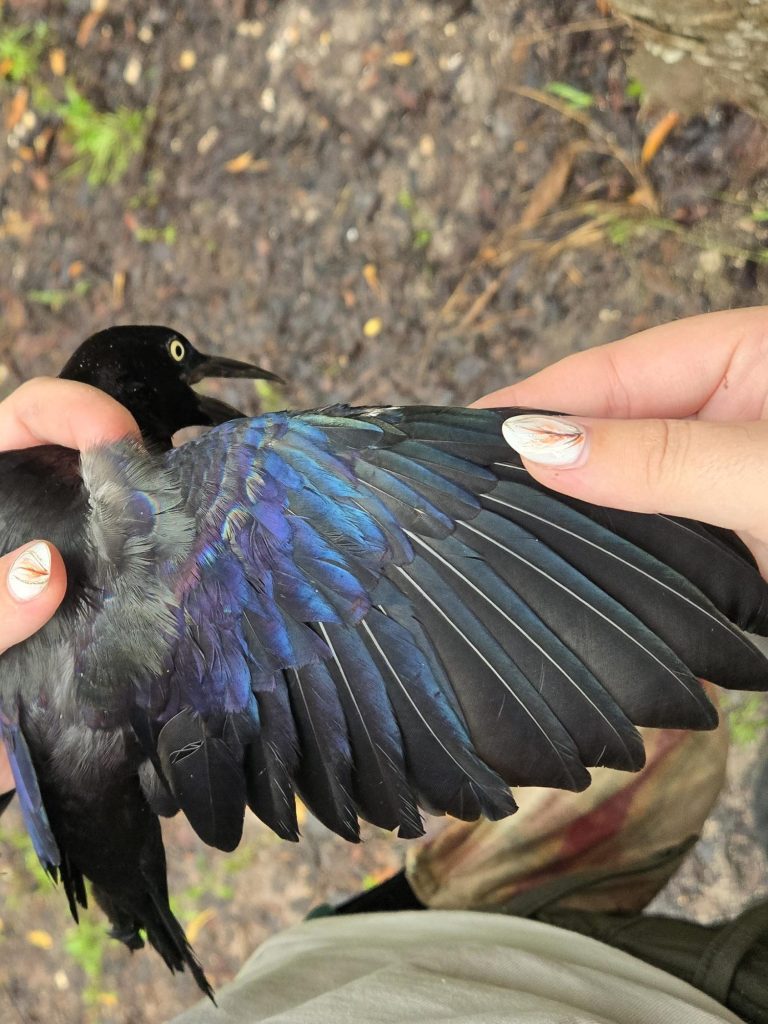
First, it’s important to understand what’s in feathers that give them their signature colors and appearances. Generally speaking, feather color can be classified into two categories: structural color and pigment. Structural color includes things like the iridescence we encounter on grackles (image left, Andrew Leach). This optical illusion is caused as light is refracted by the proteins in the feather, which acts like a prism. Blue colors seen in birds are nearly always structural colors. In addition, many species reflect UV light, which is another example of a structural color.
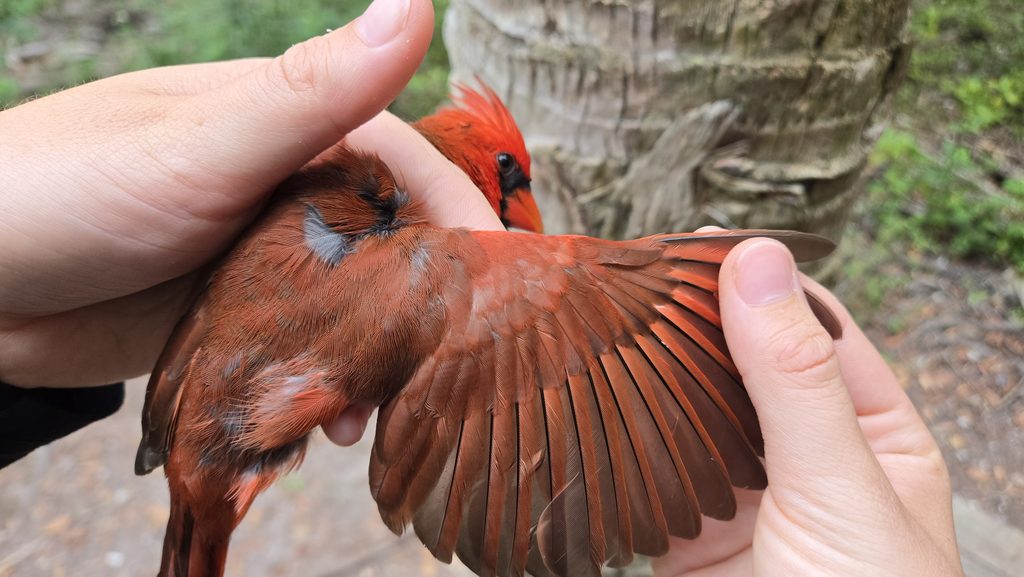
But for the vast majority of diversity in plumage that we see in nature, we’re looking at pigment. This kind of coloration is produced by carotenoids, melanins, and porphyrins. Carotenoids are acquired by eating foods high in carotenoids, and they are primarily responsible for the yellow coloration in the throat of a common yellowthroat or the bright red of northern cardinals. Melanins are deposited as tiny flecks of color on the skin and feathers, and produce colors from dark blacks to pale yellows. In addition to altering color, melanin makes feathers stronger. If you’ve ever noticed that a lot of mostly white birds have black flight feathers, this is why. The last pigment, porphyrins, is the product of modifying amino acids. These fluoresce in a bright red shade, but can also produce pinks, browns, and greens. While they’re found across multiple families of birds, we don’t typically encounter these pigments in the field here in Florida.
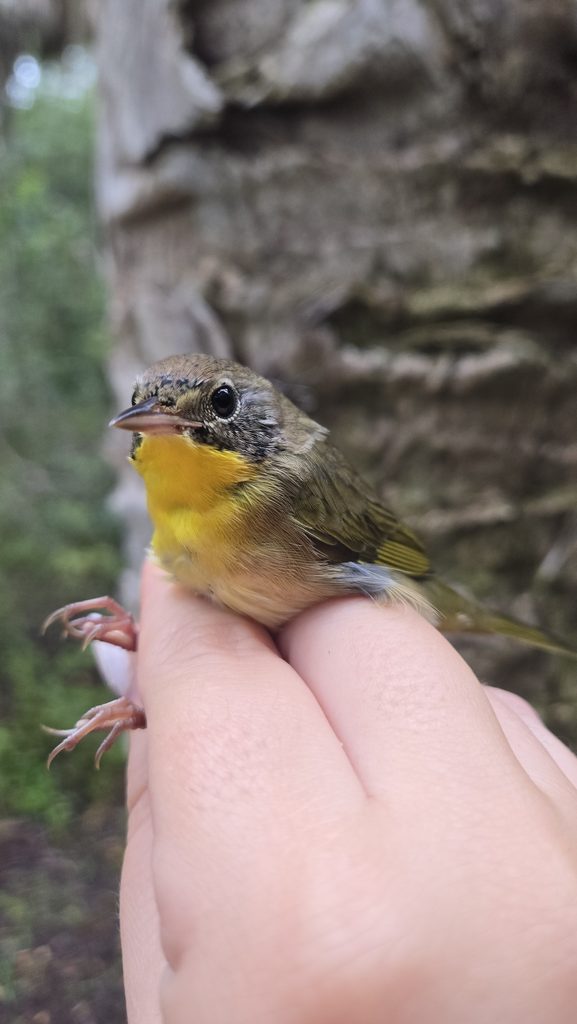
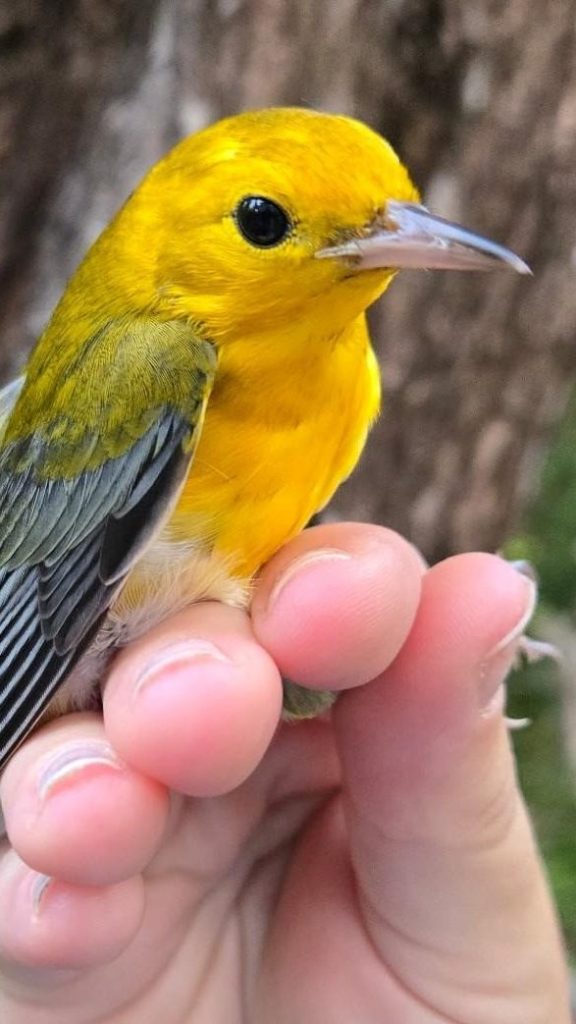
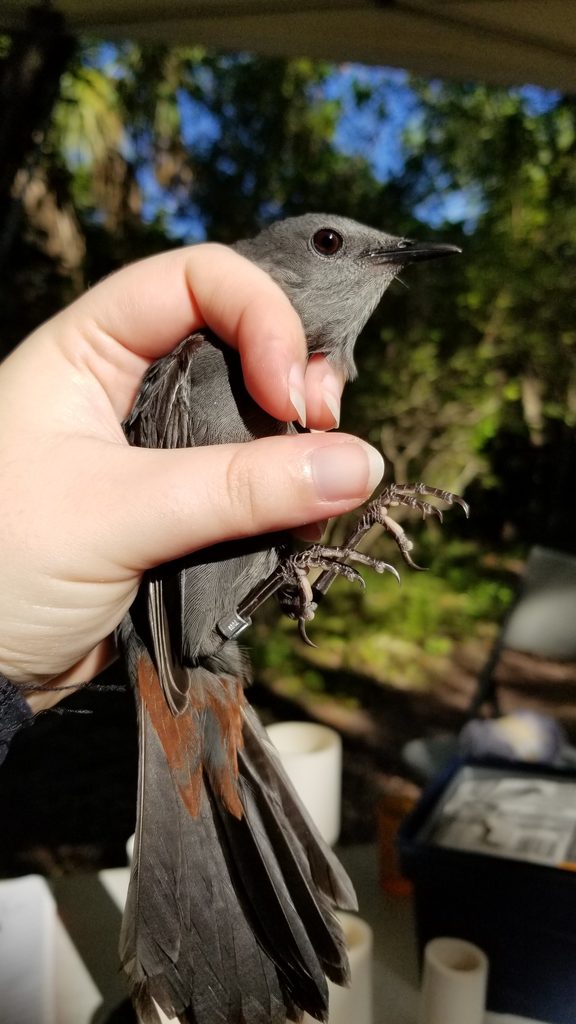
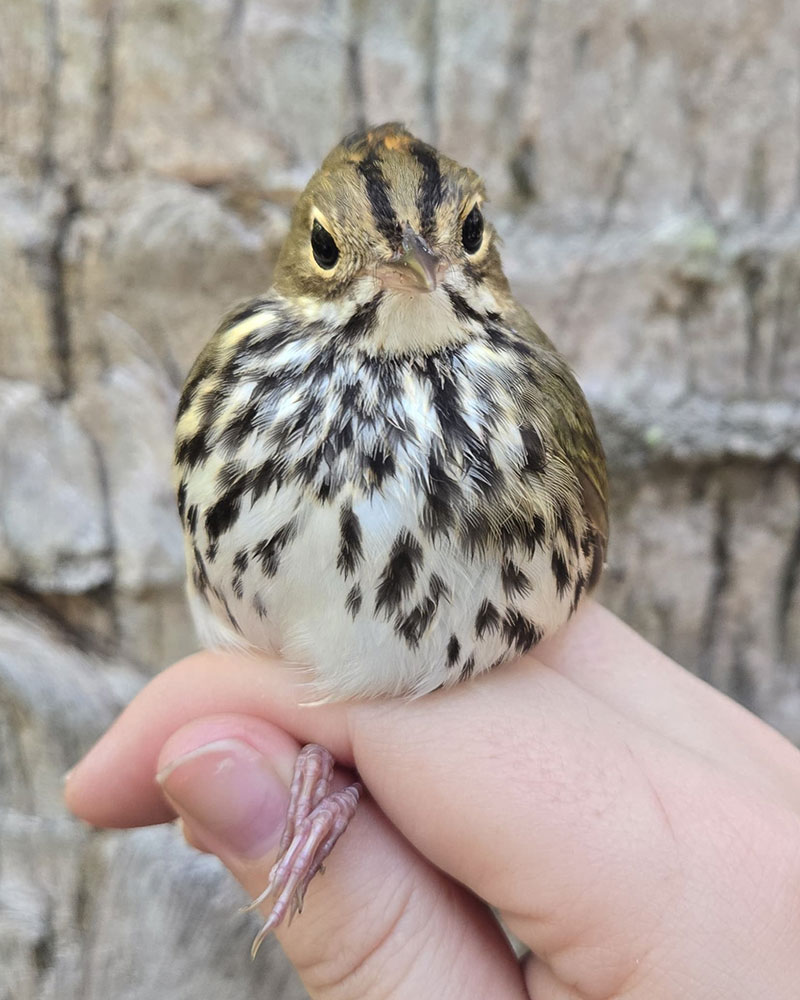
Sometimes, though, weird stuff happens.
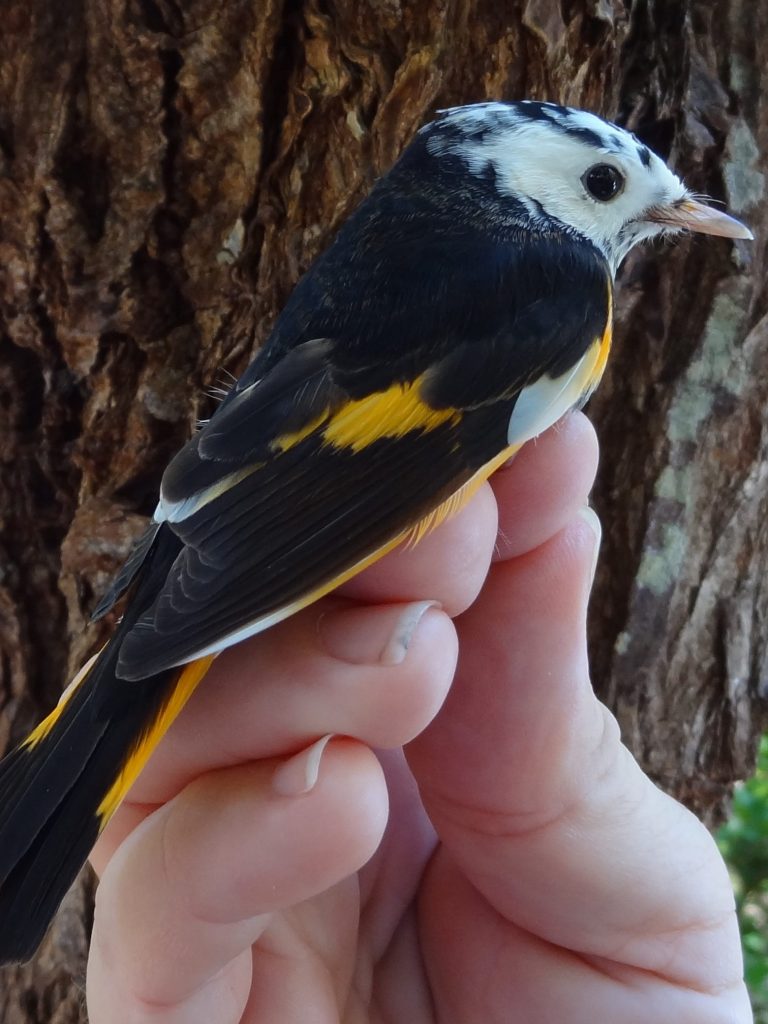
Take, for example, leucism. This occurs when a congenital genetic anomaly causes some or all feathers on a bird to lack melanin even though those feathers should be melanated. For example, we encountered an American redstart with several leucistic rectrices. Because this weakens the feather, and may also make the bird less cryptic and thus more vulnerable to predation, full leucistic birds often struggle to survive in the wild. But partial leucism is much more common. Even in subsequent molts, this coloration will be retained, making these individuals much more identifiable. We also often encounter leucism in the heads of many species.
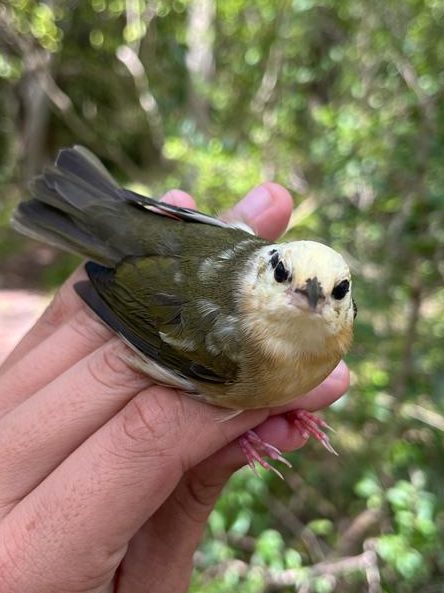
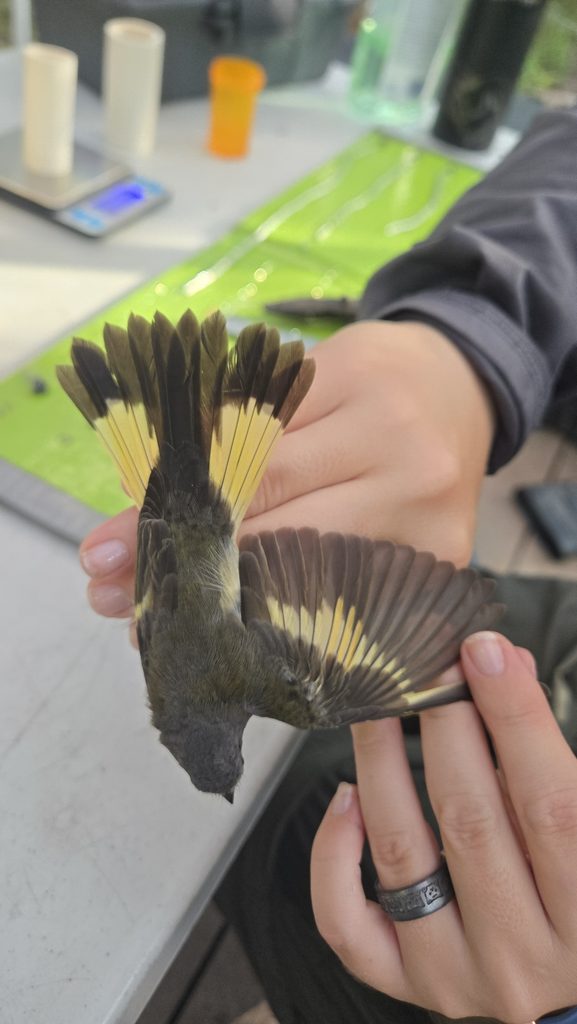
Carotenoids, which are accumulated through a bird’s diet, are a prime example of “you are what you eat.” As a result, if a bird was eating something higher in carotenoids when some of its feathers grew in, those feathers may take on a more reddish tinge than the surrounding feathers. For example, last week we encountered this two-toned American redstart. If you look closely, you might notice it has begun to replace its secondary flight feathers, during a period it was eating a diet richer in carotenoids – giving it a more vibrant, orange tone that contrasts with the surrounding pale yellows.
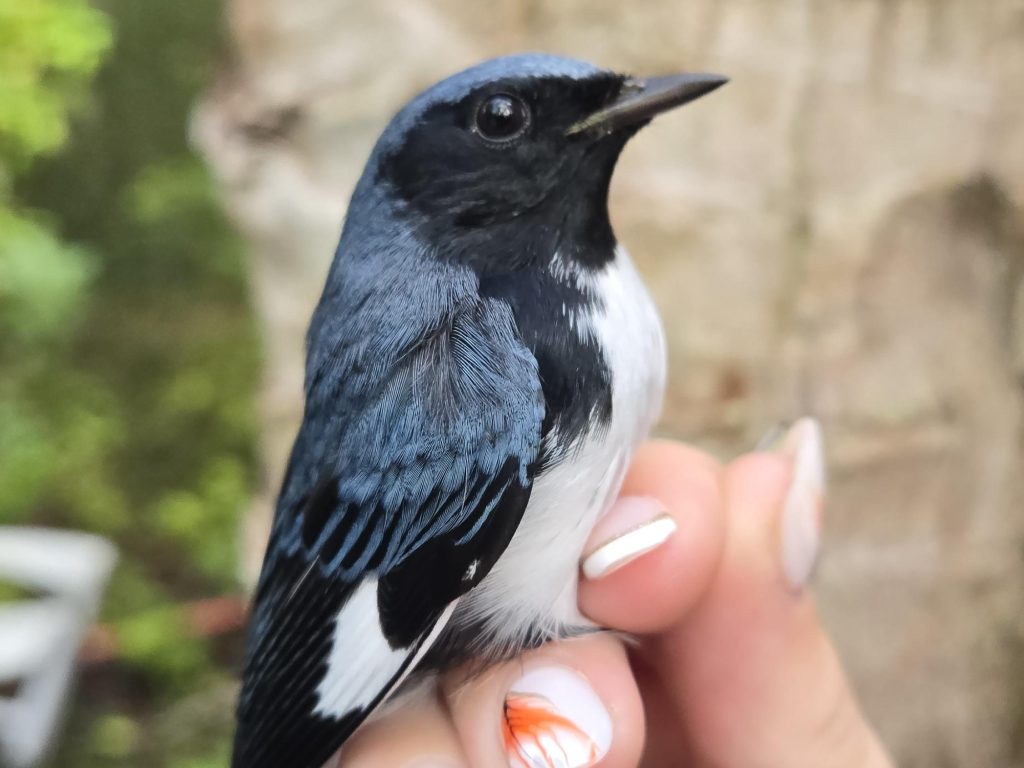
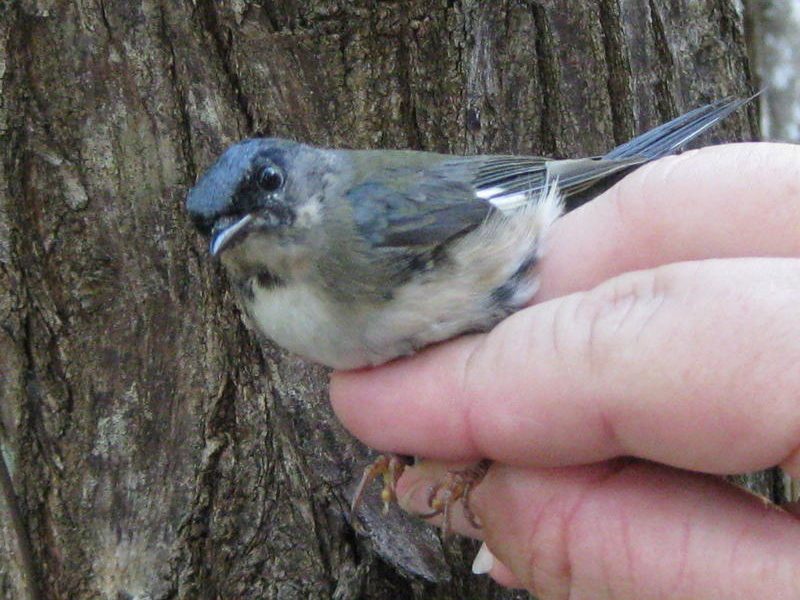
Another cause of odd coloration in birds is chimerism, which produces gynandromorphs. This rare genetic condition occurs when two fertilized embryos fuse together early in development, which creates a bird with two different sets of DNA. This condition is most noticeable in sexually dimorphic birds, where chimeras often display plumage that is half male and half female, most commonly split right down the middle. This condition is not unique to birds, and can occur in a vast range of species, from plants to humans. This is by far the rarest we encounter, like the black-throated blue warbler below. Male or female? Maybe both.
These atypical feather colorations aren’t often seen, but when they are, they can offer banders a bit more variety to the standard plumages we grow so familiar with.
Special thanks to Renee Fonseca for helping to write this blog post!
Fall 2026 totals (August 15 – September 20)
| SPECIES | NEW | RETURN |
| Common ground dove | 1 | |
| Chuck-will’s widow | 2 | |
| Traill’s flycatcher | 3 | |
| Alder flycatcher | 1 | |
| Great crested flycatcher | 1 | |
| Thick-billed vireo | 1 | |
| Yellow-throated vireo | 1 | |
| Red-eyed vireo | 18 | |
| Blue-gray gnatcatcher | 8 | 1 |
| Northern parula | 12 | |
| Yellow warbler | 1 | |
| Black-throated blue warbler | 18 | |
| Prairie warbler | 15 | |
| Black-and-white warbler | 61 | |
| American redstart | 117 | |
| Prothonotary warbler | 6 | |
| Worm-eating warbler | 88 | |
| Swainson’s warbler | 36 | |
| Ovenbird | 189 | 4 |
| Northern waterthrush | 58 | |
| Louisiana waterthrush | 2 | |
| Kentucky warbler | 1 | |
| Common yellowthroat | 15 | |
| Hooded warbler | 1 | |
| Northern cardinal | 5 | 2 |
| Common grackle | 1 | |
| TOTAL | 662 | 7 |
| # BIRDS CAPTURED | # SPECIES | # NETS | NET HOURS | CAPTURE RATE (BIRDS/100 NH) | |
| SEASON TOTAL | 755 | 26 | 25 | 4770.25 | 15.827 |