
Michelle here guest posting from up in New York. I won’t be mean and tell y’all what the temperatures are. We have about one more month of enjoying the Neotropical migrants before we hand them all off to South Florida and further locations, and we then get invaded by sparrows, kinglets, juncos, sea ducks and other species that make South Floridians drool. On the other hand, I miss having a yard full of Painted buntings!
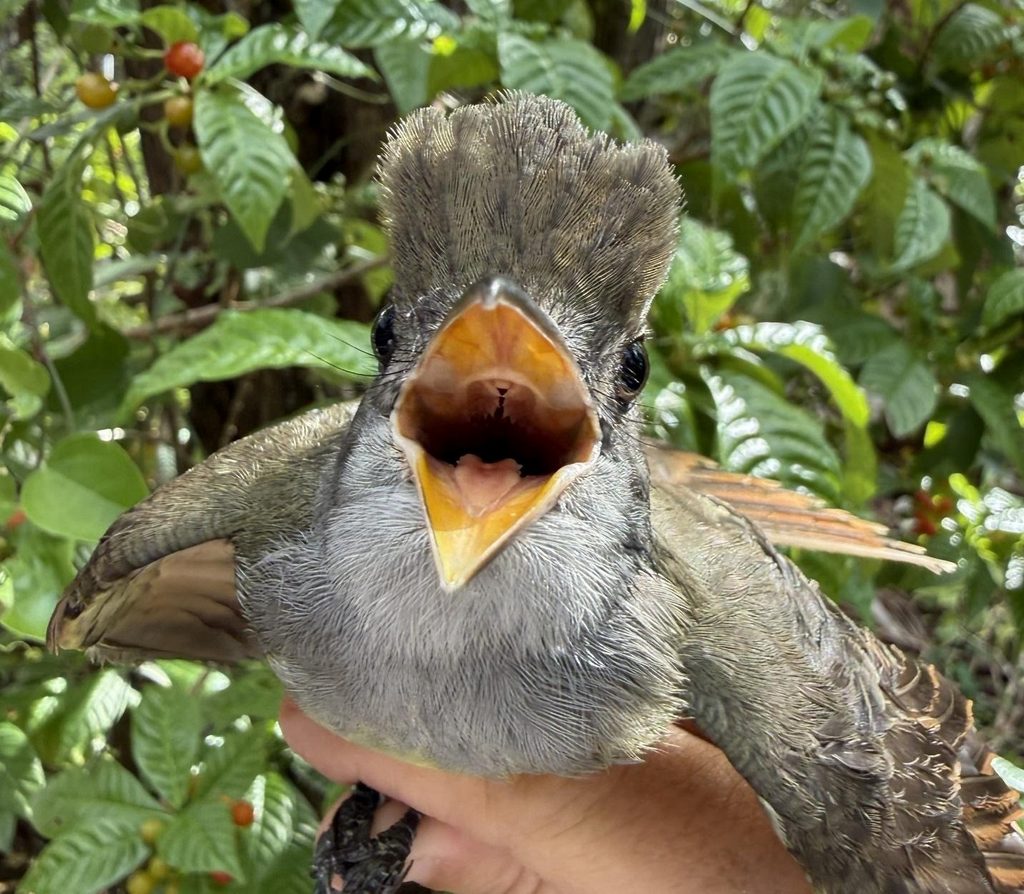
The mouth on that guy! Sheesh! Great crested flycatchers are a notoriously high-strung species and a breeder at Cape Florida. You’ve heard their loud ‘WHEEEPPP!’ It’s hard to ignore. I also hear them in Central Park.
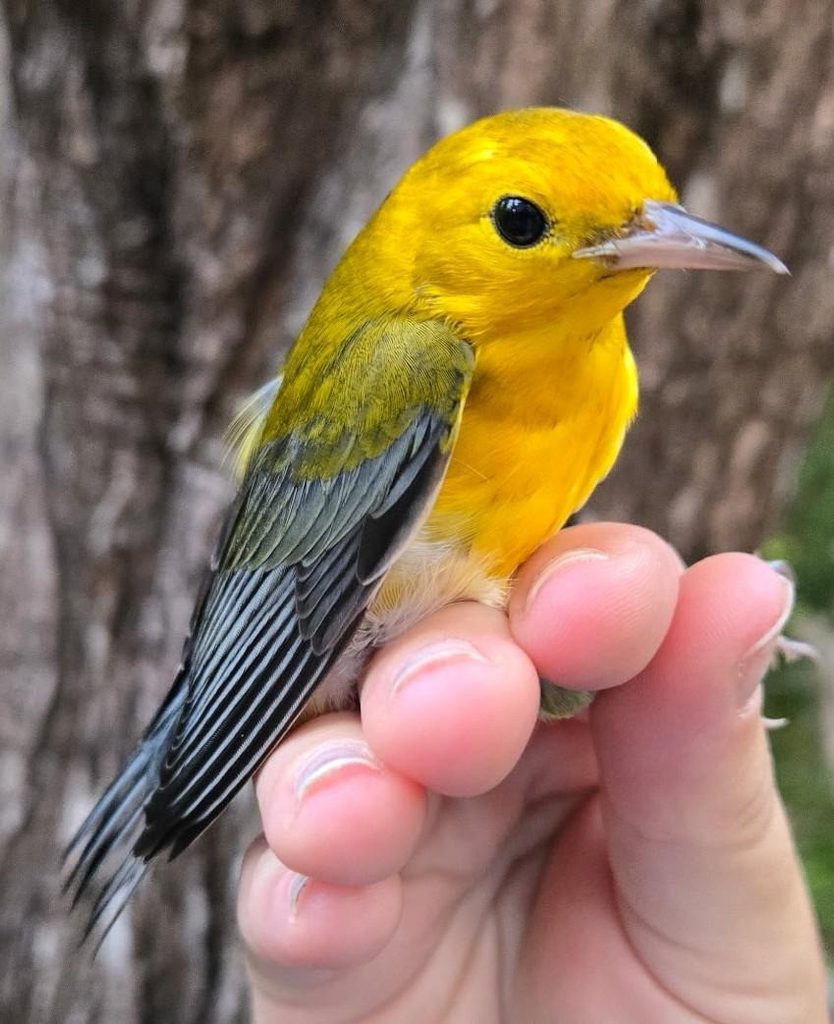
It’s been a good season so far for Prothonotary warblers, an early migrant who mostly move through in August. Some years we only band one or two, but we are up to six, including this gorgeous ale from August 24.
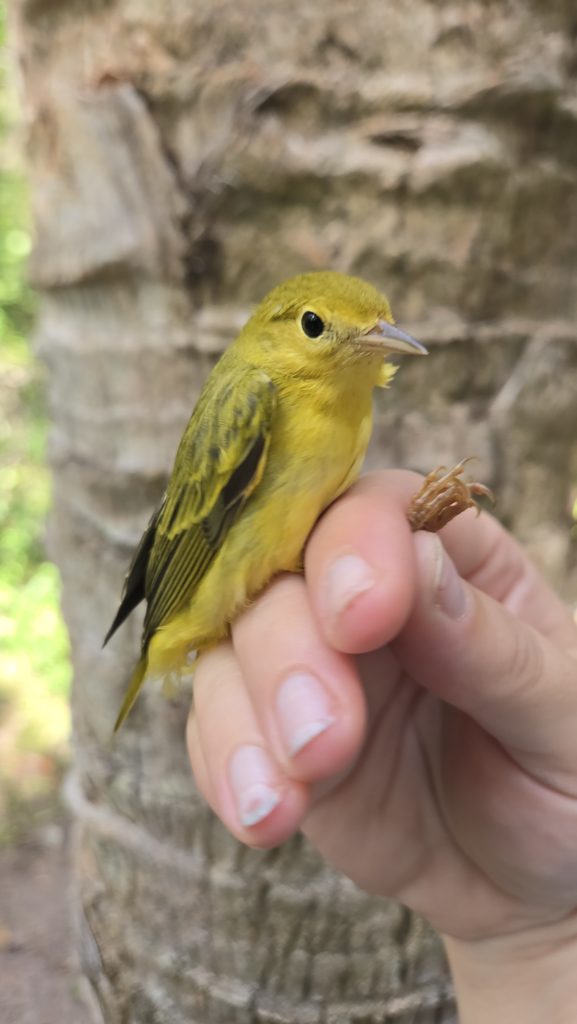
Yellow warblers are an abundant species that ranges widely across North America but are rarely encountered at Cape Florida as they prefer to go across or around the Gulf of Mexico to their wintering grounds in Central America and northern South America. This guy was also banded on Aug 24, a day for yellow things and quality over quantity. We have only banded 7 others in 25 seasons, the last one ten years ago in 2016.
The early season also features several local resident species that don’t realize the nets are up again. This is a good time to inventory our previously-banded Northern cardinals, and they eventually learn where the nets are and avoid them.
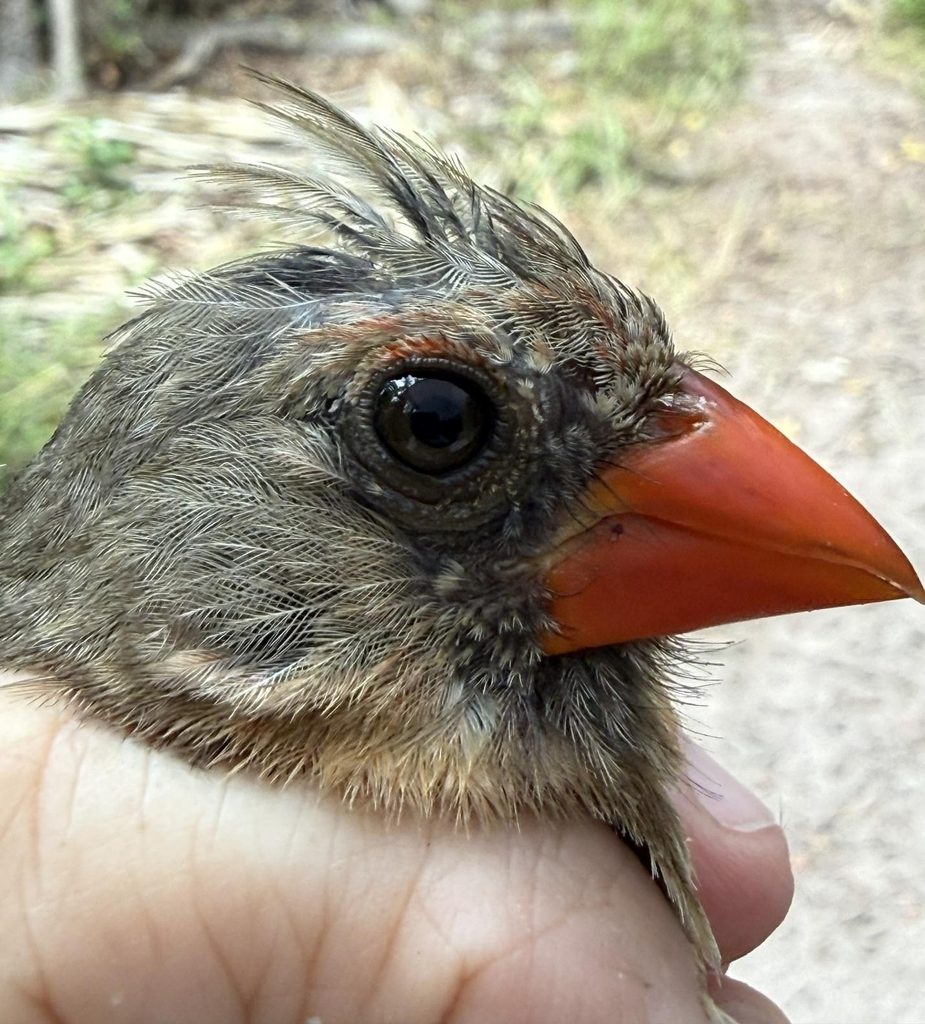
Most species of songbirds undergo a full molt when they finish breeding and before migration (if they are migratory) so we see a lot of scruffiness in August. This female Cardinal’s crest will look much better in September and October.
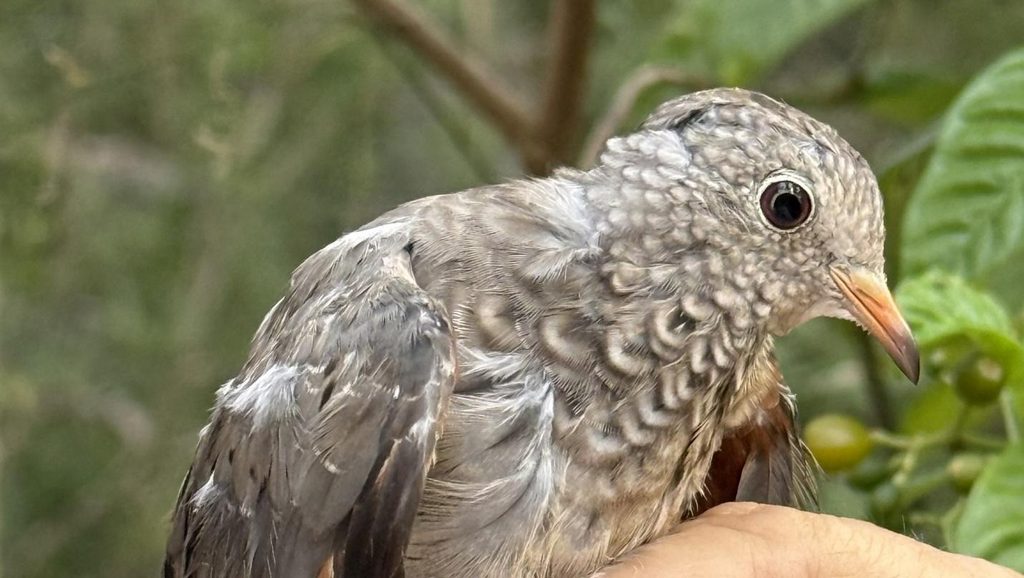
Another local breeder is the Common ground-dove. This is a juvenile bird that is also going through a heavy molt, but it will not molt its largest flight and tail feathers. We use the difference between the original feathers and the new ones to help age birds as born this summer; this is what is meant by a ‘molt limit’. When a nestling bird grows its first entire set of feathers at once, the feathers have a different quality than the adult feathers replaced one at a time. It requires a lot of energy and good nutrition, and the feathers are still a little weakly built and they wear faster. We can use this wear to age birds into the spring.
Our best day so far was on September 1 with 53 birds of 10 species banded. Classic Cape Florida species were well-represented such as Ovenbirds, American redstarts and Worm-eating warblers. A Hooded warbler was a treat!
Fall 2026 totals (Aug 15 – Sept 3)
| SPECIES | NEW | RETURN |
| Common ground dove | 1 | |
| Chuck-will’s widow | 1 | |
| Traill’s flycatcher | 3 | |
| Great crested flycatcher | 1 | |
| Red-eyed vireo | 4 | |
| Blue-gray gnatcatcher | 3 | |
| Northern parula | 5 | |
| Prairie warbler | 8 | |
| Black-and-white warbler | 19 | |
| American redstart | 62 | |
| Prothonotary warbler | 6 | |
| Worm-eating warbler | 21 | |
| Swainson’s warbler | 7 | |
| Ovenbird | 58 | |
| Northern waterthrush | 15 | |
| Louisiana waterthrush | 2 | |
| Kentucky warbler | 1 | |
| Hooded warbler | 1 | |
| Northern cardinal | 2 | 2 |
| TOTAL | 226 | 3 |
| # BIRDS CAPTURED | # SPECIES | # NETS | NET HOURS | CAPTURE RATE (BIRDS/100 NH) | |
| SEASON TOTAL | 229 | 21 | 25 | 2558.25 | 10.09 |