
Have you been noticing more birds in your area? There’s a pretty good chance you have. We are just about a month into our banding season and entering what we consider peak migration here in South Florida based on historical data. So far this season seems to be confirming this trend, as we have begun seeing an uptick in bird movement over the last week. We also had a very special visitor – only our fifth in 25 years! – a thick-billed vireo!
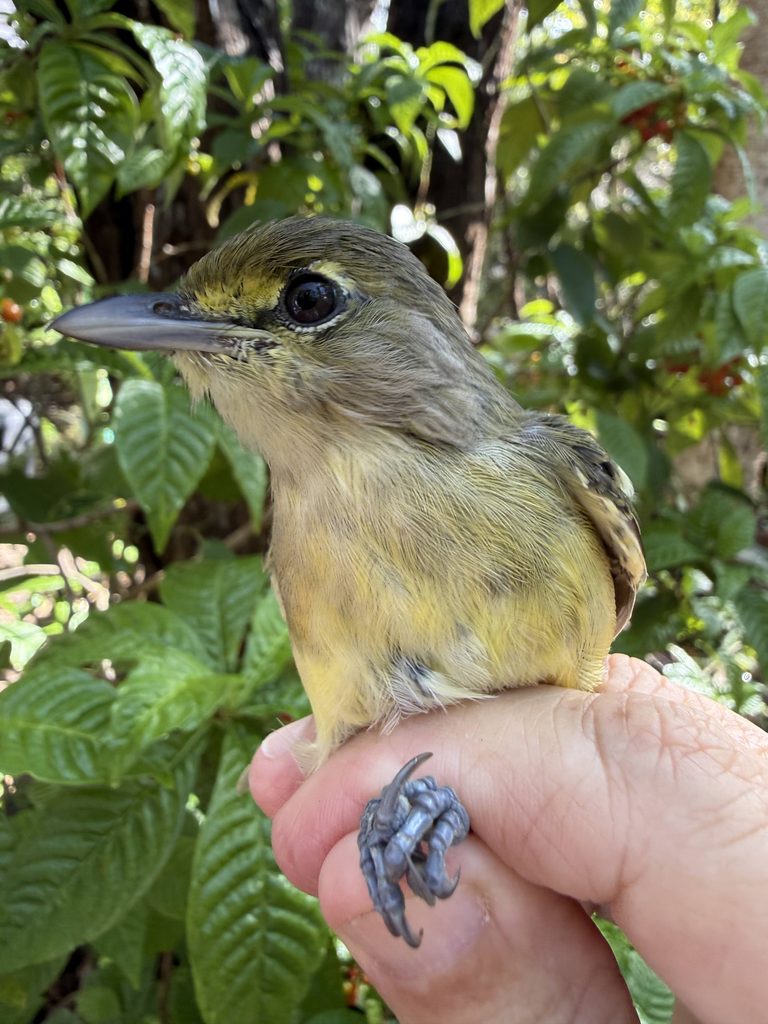
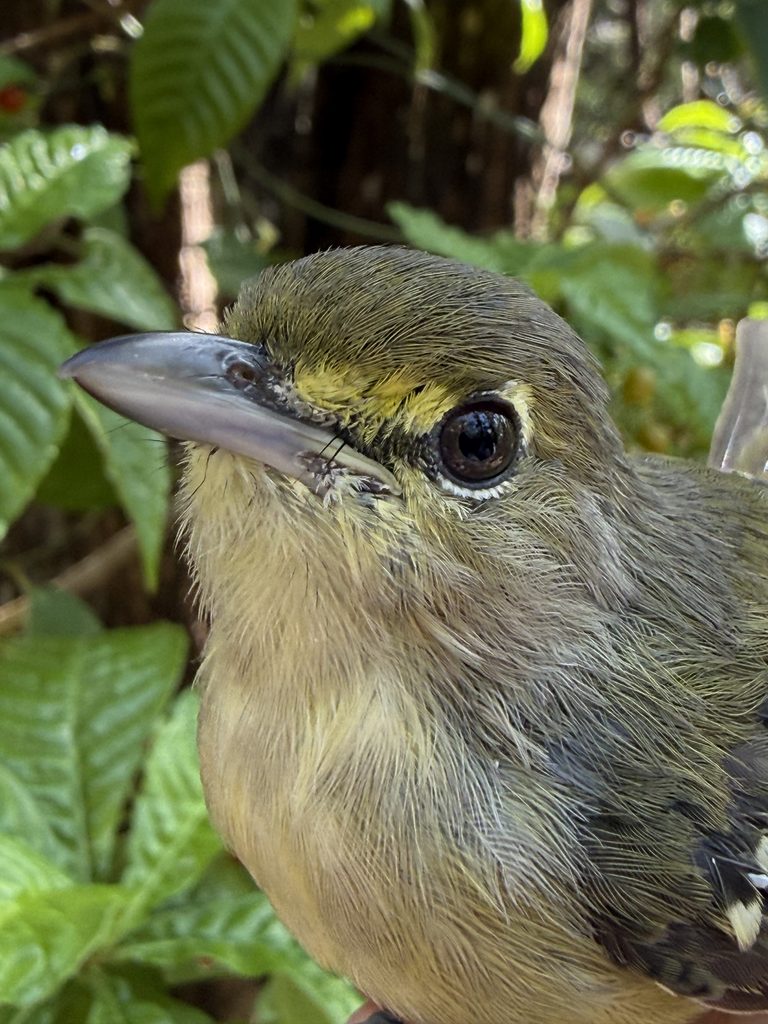
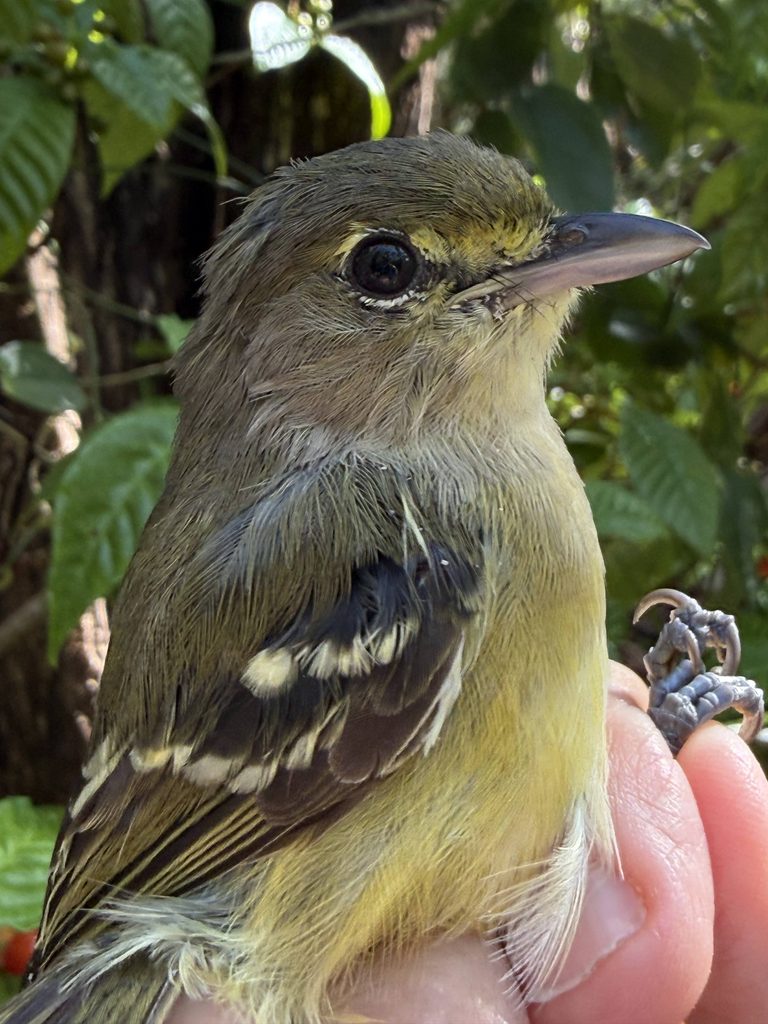
Our volunteers often ask us why we open nets in mid-August, when the mosquitoes and humidity are at their worst and migration is a trickle at best. But there are very good reasons for this! First, there are early migrants that we might miss if we delayed opening (still holding out hope for you, Cerulean!). Perhaps more importantly, it gives us valuable time to train our new volunteers and get warmed up before a big rush.
We take training very seriously at the station because a well-trained crew is our most important tool to reduce the risk of harm to the birds. When new volunteers commit to their first season, they are committing to an intense progressive course in how to operate a bird banding station. Over the course of several seasons, they may move up to gain new skills and earn new responsibilities.
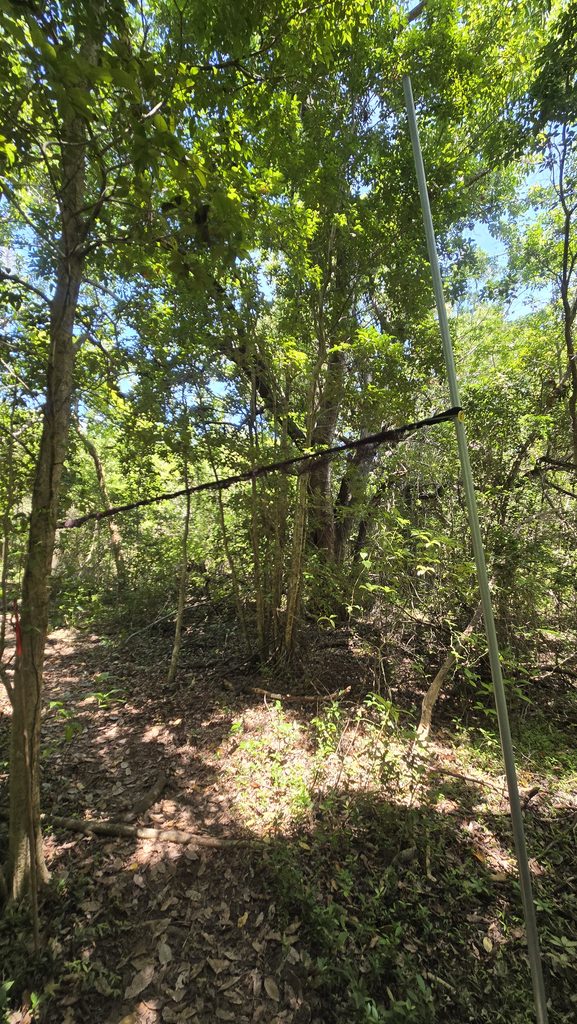
We begin with the basics – how to properly care for the mist nets by opening and furling them correctly. This seems easy on paper but I can attest it takes a while to find what method works best for you. But once you do, there is nothing more satisfying than rolling a net into a beautiful tube at the end of the day and springing it open the next morning with ease! Closing nets properly ensures no birds are accidentally caught in the net when our crew isn’t out there to monitor them.
At the same time, we start training the new volunteers in how to safely hold birds in both grips. The banders grip tends to come most naturally, but it’s one you’ll likely rarely see on the blog. That’s not because it’s a bad grip – in fact, it’s the safest way to hold a bird, and the way we’ll hold them about 90% of the time that we are handling them. However, with the index and middle finger around the neck of the bird, and the body of the bird securely in the palm of our hands, you’d have to be really good at identifying birds by only their face and feet to understand what we were holding. So most of our photos will display birds in photographer’s grip – a much harder hold to master. Our new volunteers may take several weeks to learn how to hold birds this way safely. This is by far one of the main reasons we need the slower days of August and early September – they allow us to slow down and take the time needed to provide 1-on-1 instruction to the new team.
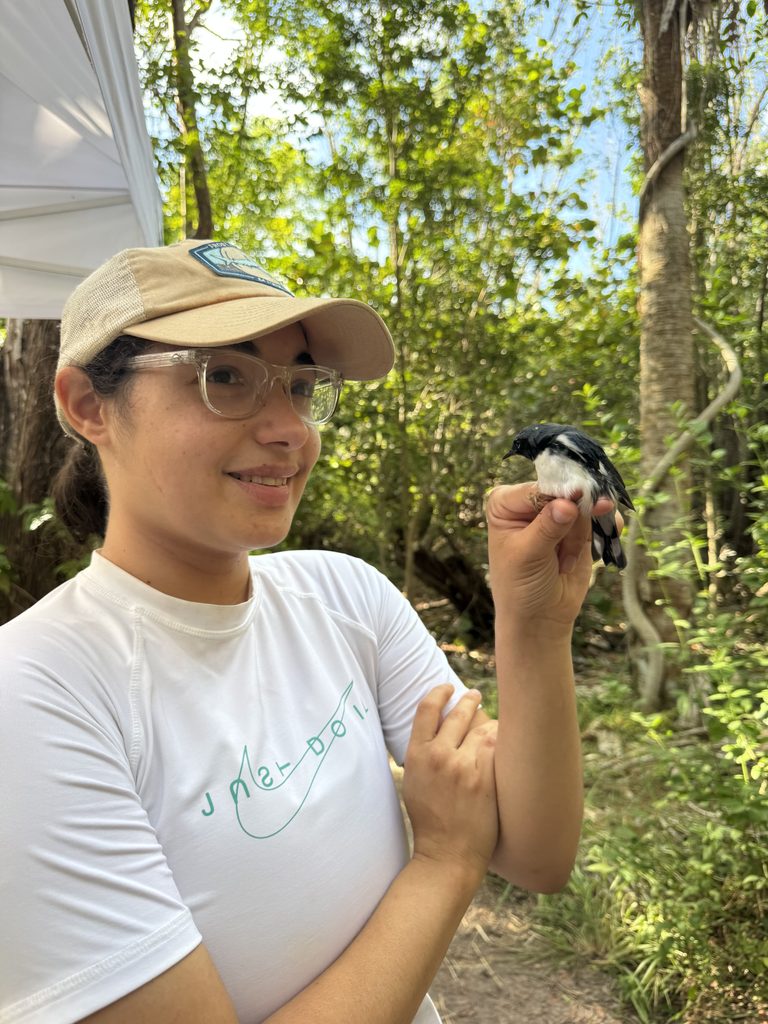
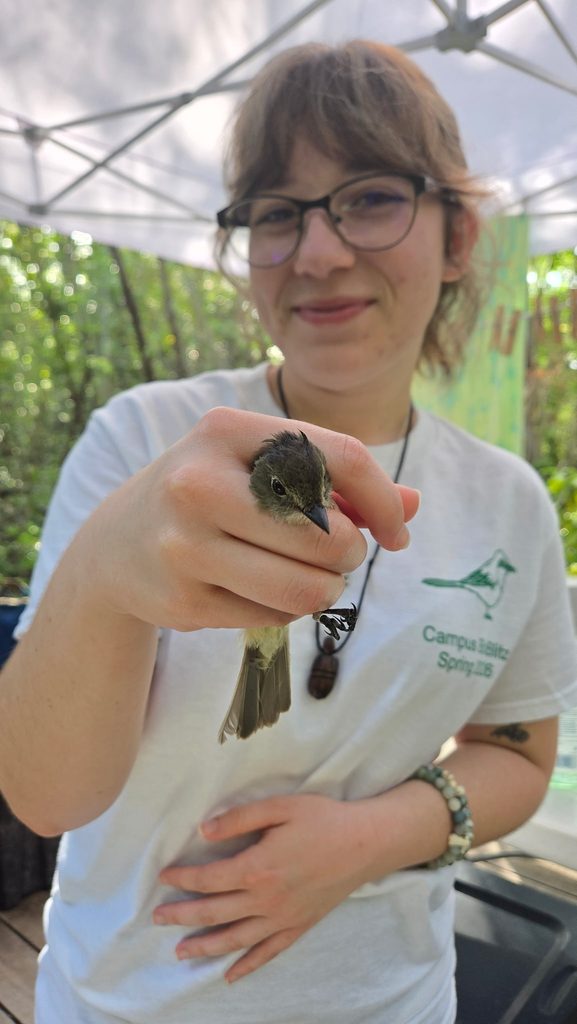
While they’re gaining these hands-on skills, they are also joining our returning crew members on net runs to familiarize themselves with the trails and also hopefully observe several extractions. After observing many extractions, and demonstrating competency in both grips, they’ll try their first extraction with support observing them to make sure the bird is being handled safely and ready to step in if the wrap turns out to be worse than expected.
Even after learning how to extract birds, I can also guarantee we never stop learning how to extract. No matter how many years you have been banding or extracting, odds are there will come a day where a bird (likely a common yellowthroat) has managed to defy the laws of physics and get itself tangled up in a way that doesn’t make sense.
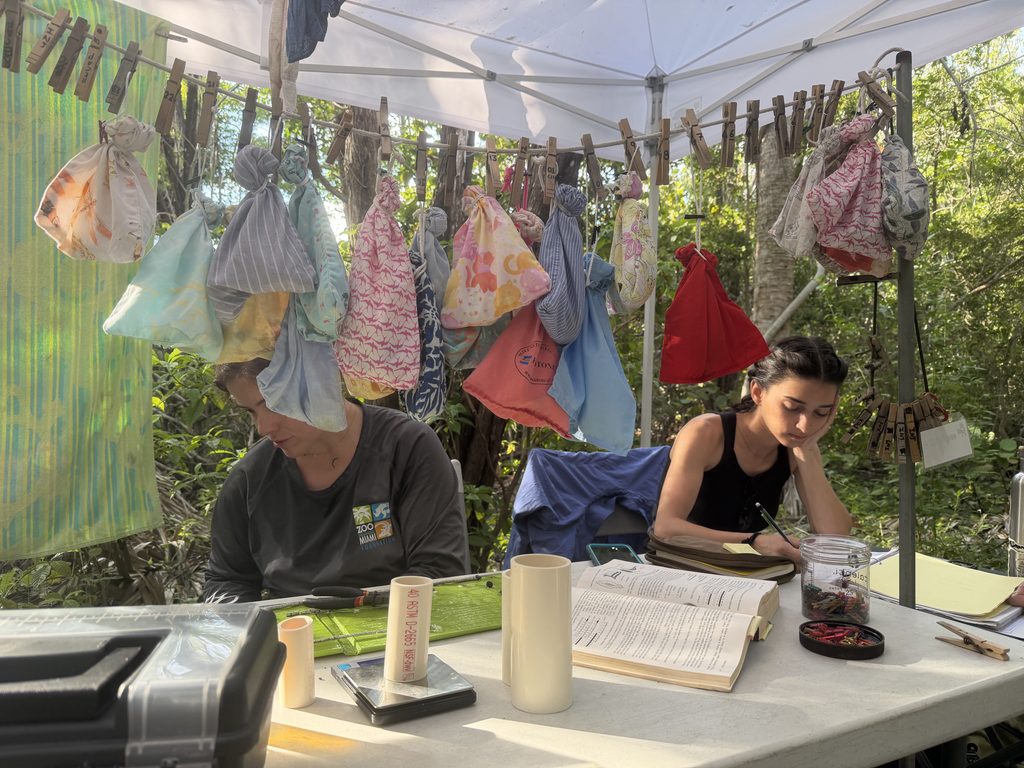
And that is the magic of bird banding: we never stop learning. Every day is a little bit different and the birds find new things to teach us (or torment us with). We even learn different things from the crews that are out on a different day than ours! We are also very fortunate to have other knowledgeable banders in the state, like Charlie, who can visit occasionally and share their wisdom with us (thanks, Charlie, for coming down and running things for a few days!).
Our volunteer crew for this season is full, but if you are interested in joining us for a future season, we invite you to reach out and see if it’s right for you.
Fall 2026 totals (August 15 – September 12)
| SPECIES | NEW | RETURN |
| Common ground dove | 1 | |
| Chuck-will’s widow | 2 | |
| Traill’s flycatcher | 3 | |
| Great crested flycatcher | 1 | |
| Thick-billed vireo | 1 | |
| Red-eyed vireo | 11 | |
| Blue-gray gnatcatcher | 6 | |
| Northern parula | 8 | |
| Yellow warbler | 1 | |
| Black-throated blue warbler | 11 | |
| Prairie warbler | 10 | |
| Black-and-white warbler | 45 | |
| American redstart | 97 | |
| Prothonotary warbler | 6 | |
| Worm-eating warbler | 56 | |
| Swainson’s warbler | 18 | |
| Ovenbird | 133 | 2 |
| Northern waterthrush | 40 | |
| Louisiana waterthrush | 2 | |
| Kentucky warbler | 1 | |
| Common yellowthroat | 2 | |
| Hooded warbler | 1 | |
| Northern cardinal | 5 | 2 |
| Common grackle | 1 | |
| TOTAL | 462 | 4 |
| # BIRDS CAPTURED | # SPECIES | # NETS | NET HOURS | CAPTURE RATE (BIRDS/100 NH) | |
| SEASON TOTAL | 462 | 24 | 25 | 3768.5 | 14.117 |